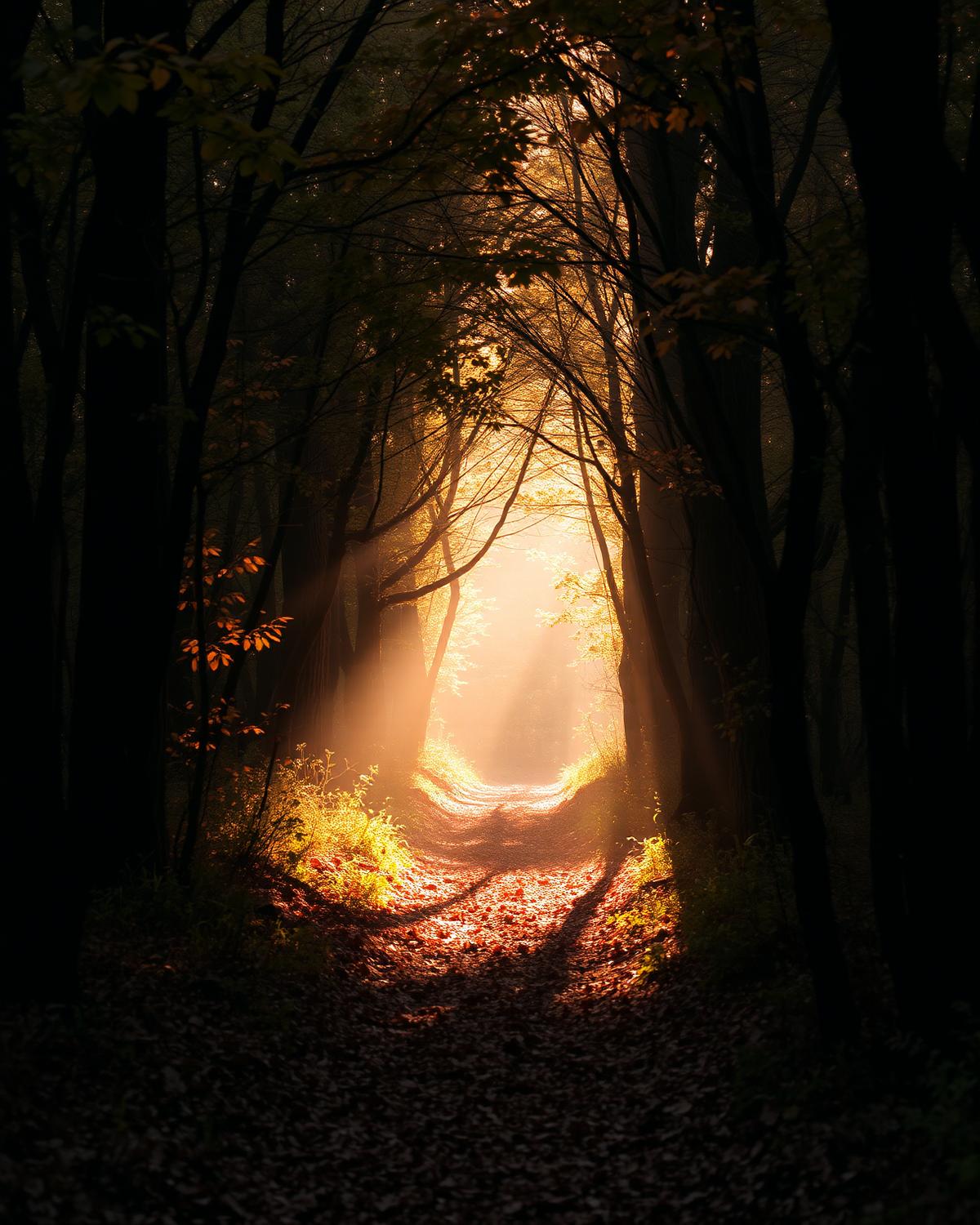

The sacred has a reputation for living in grand places, behind carved doors, at the top of long staircases, and inside ceremonies that somebody else designed long ago. Those places can be beautiful, and for many people they are cherished and true. And yet the sacred has another address, one that is much easier to reach on an ordinary Tuesday. It lives in the first quiet minute of the morning, in the steam rising off a cup held in both hands, and in the pause at a doorway before the day begins. A spiritual practice does not have to be inherited whole or performed perfectly to be real. It can be built slowly, honestly, and in a person's own language, out of the moments that already make that person stop and breathe.
This is an invitation with no doctrine inside it, and it is offered with respect for every path a reader may walk. A person of deep and settled faith may find that a small personal practice sits peacefully alongside the tradition they already love, like a chair pulled up beside a familiar table. A person whose beliefs are changing, or who left a tradition behind, may find that a small practice of their own is a gentle way to keep what still feels true. A person with no faith at all may find that reverence needs no label, because wonder, gratitude, and attention are human capacities that belong to everyone. Nobody is asked here to adopt a religion, to abandon one, or to borrow the ceremonies of a culture that is not theirs. What is offered is simpler and more personal than that. What is offered is permission to treat a few of your own minutes as holy ground.
Reverence is a better foundation than rules, because rules tend to make a practice brittle, while reverence makes it alive. A rule says the practice must happen at one time, in one posture, for one exact length, or it does not count. Reverence says something entirely different. Reverence says that the minute counts because of the quality of attention brought to it, and that a distracted, honest, ninety second pause can hold more truth than an hour performed out of guilt. When a practice is built from reverence rather than rules, it can survive real life. It can survive the busy week, the grieving season, and the morning when everything goes wrong, because it was never a performance in the first place. It was a relationship, and relationships are allowed to have quiet days.
Begin, if you like, with light. A candle lit in the early dark or at the edge of evening has a way of changing the temperature of a room without changing anything else in it. Lighting one can mark a threshold, this far the noise of the day, and no farther. Watching a small flame for the length of a few breaths is not an escape from life. It is a way of arriving in it, and many people across many centuries and many traditions have found their way to stillness beside a simple light. There is no required meaning to assign to it. The light can stand for gratitude, for remembrance, for hope, or for nothing more elaborate than a person's decision to be present for one whole minute.
Breath belongs in this conversation as well, because breath is the oldest threshold any of us owns. A few unhurried breaths at the start of the day can serve as a doorway, and a few at the end can serve as a closing. For some people, that quiet naturally becomes prayer, spoken in words that feel like home. For others, the same minutes are simply silence, kept the way one keeps a garden, with patience and without needing to name what grows there. Both are welcome here, and neither is a lesser version of the other. What matters is that the moment is set apart on purpose, however briefly, and that the person inside it is met with the same kindness they would offer a friend.
Gratitude is another small and sturdy material to build with, because it asks for nothing and changes the lighting of almost everything. Naming one true thing at the threshold of morning, a person, a mercy, a piece of ordinary luck that went unnoticed yesterday, is a practice that takes less than a minute and can be kept for an entire lifetime. So is standing at a window at night and giving the moon its moment, not as a symbol that must be decoded, but as a reminder that beauty keeps its appointments whether or not we remember to look up. These are not techniques for manufacturing happiness. They are ways of noticing that the day, even the hard day, was not only hardship.
A practice built this way grows best when it stays small enough to keep. One moment, chosen on purpose, will do more than seven intentions that collapse by Thursday. Choose the threshold that already exists, the kettle, the doorstep, the bedside, or the walk to the car, and let the practice attach itself to a minute that is already faithful. Let it be brief on the tired days and longer on the generous ones, and let it change with the seasons of a life, because a living practice is allowed to grow the way everything rooted grows. Slowly, honestly, and in its own direction.
In the end, the sacred was never only waiting in the grand places. It was hiding in plain sight, inside ordinary minutes, in candlelight and breath, in gratitude and moonlight and the small pause before a door opens. A practice that feels like your own does not need to impress anyone, explain itself to anyone, or resemble anyone else's. It only needs to be true, and to be kept with tenderness. Begin with one minute that you refuse to rush. You may find that the minute was holy all along, and that it was simply waiting for you to arrive.